

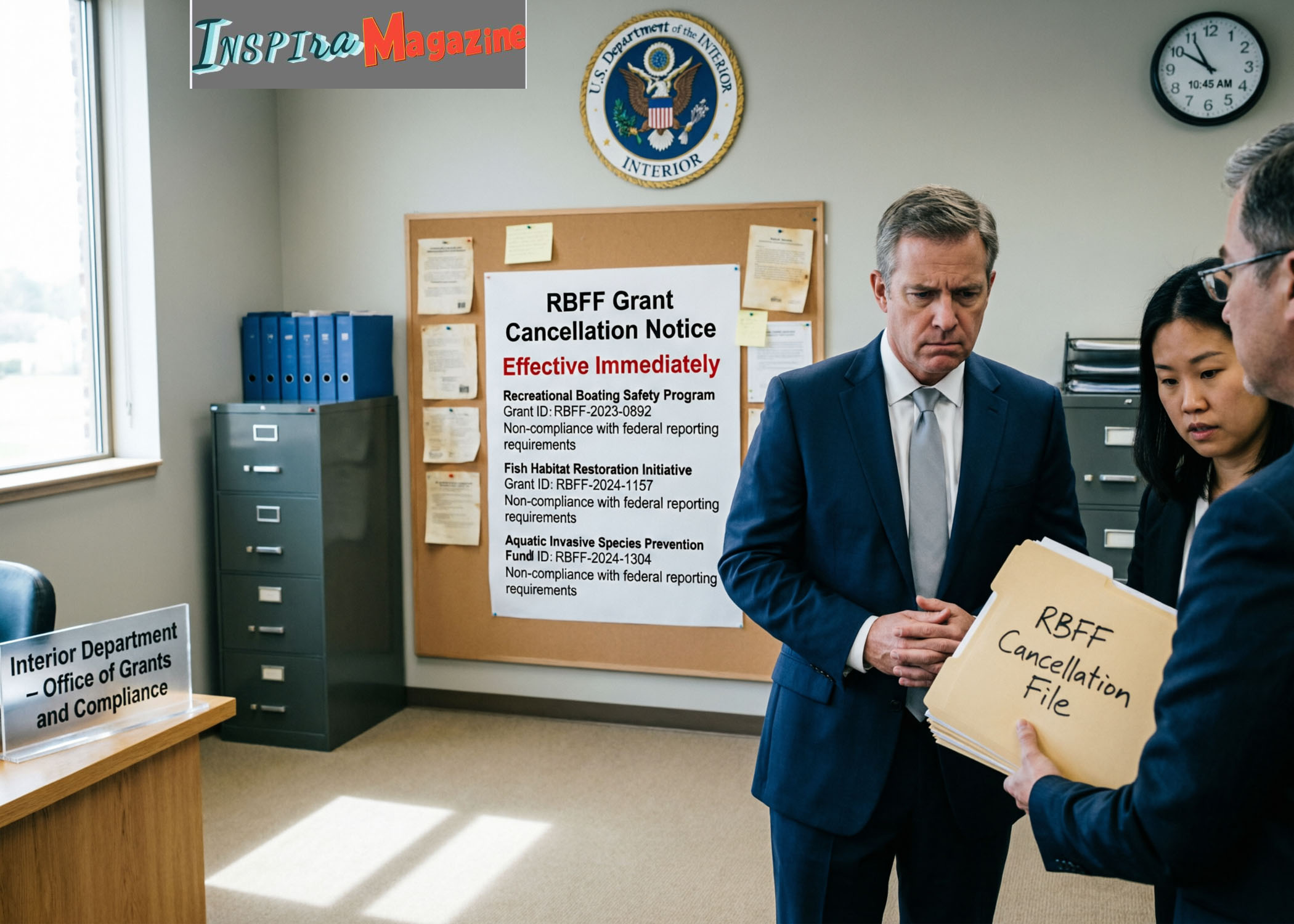
The interior department rbff grant cancellation has sparked widespread discussion across conservation groups, recreational fishing communities, and state wildlife agencies. For years, the Recreational Boating & Fishing Foundation (RBFF) has worked closely with federal and state partners to promote fishing participation, boating safety, and aquatic conservation funding. When news of the cancellation surfaced, it raised questions about funding continuity, conservation programs, and the future of outdoor recreation initiatives.
This development isn’t just a bureaucratic update—it touches millions of anglers, boating enthusiasts, and conservation advocates across the United States. Understanding what led to the interior department rbff grant cancellation, what programs are affected, and what may happen next is essential for anyone involved in outdoor recreation, fisheries management, or public lands policy. Let’s break it down in clear, practical terms.
Understanding the Role of the Interior Department and RBFF
The U.S. Department of the Interior oversees agencies such as the Fish and Wildlife Service, National Park Service, and Bureau of Land Management. Its mission includes protecting natural resources and supporting public access to outdoor recreation. Through various grant programs, the department distributes funds to nonprofit organizations and state agencies to support conservation and public engagement.
The Recreational Boating & Fishing Foundation plays a key role in increasing participation in fishing and boating. Funded in part through federal grants—often tied to excise taxes from fishing equipment and boat fuel—the organization runs national campaigns encouraging Americans to get outdoors. When the interior department rbff grant cancellation became public, it signaled a potential disruption in the flow of federal support that helps sustain these outreach efforts.
To better understand the impact, it helps to look at the structure of funding before and after the cancellation.
| Funding Element | Before Cancellation | After Cancellation |
|---|---|---|
| Federal Grant Support | Active grant agreements through Interior | Grant funding paused or canceled |
| Outreach Campaigns | National marketing initiatives | Reduced or uncertain scope |
| State Partnerships | Collaborative recruitment programs | Potential restructuring |
| Conservation Revenue | Boosted via license sales | Possible decline if participation drops |
This table highlights why the interior department rbff grant cancellation has implications beyond one organization. Participation in fishing drives license sales, and license sales fund conservation.
Why the Interior Department RBFF Grant Cancellation Happened
Whenever federal grants are canceled, several factors may be at play. Policy shifts, administrative reviews, budget realignments, compliance concerns, or political transitions can all influence funding decisions. While exact reasoning varies depending on official statements and documentation, grant cancellations are rarely random.
One common reason behind such decisions is a reevaluation of program effectiveness. Federal agencies routinely assess whether funded programs are delivering measurable results. If priorities shift toward infrastructure, climate resilience, or habitat restoration, marketing-based outreach grants might face scrutiny.
Another factor may involve internal compliance or procedural adjustments. Federal grants must meet strict reporting and accountability standards. Even minor administrative discrepancies can trigger review processes that lead to suspension or cancellation. Regardless of the underlying cause, the interior department rbff grant cancellation has placed the spotlight on how conservation funding strategies evolve over time.
People Read Also : Crackstube: Complete Guide to Features, Safety, Risks, and Online Trends
The Impact on Recreational Fishing and Boating Programs
Recreational fishing in the United States is more than a pastime—it’s a multi-billion-dollar industry that supports jobs, tourism, and wildlife conservation. When anglers purchase licenses, the revenue often goes directly to state fish and wildlife agencies. Those agencies then use funds for habitat restoration, hatcheries, invasive species control, and research.
The interior department rbff grant cancellation could indirectly influence participation levels if national outreach campaigns scale back. Marketing initiatives designed to recruit new anglers and re-engage lapsed participants have historically played a measurable role in increasing license sales. Without consistent outreach, growth in participation may slow.
Industry stakeholders have voiced concerns. As one conservation advocate put it:
“Recruitment and retention programs are not optional luxuries—they are the foundation of long-term conservation funding.”
That quote captures the broader worry. If fewer people fish or boat, fewer dollars flow into conservation systems. While existing programs may continue through other funding streams, uncertainty can affect long-term planning.
How Federal Grant Programs Typically Work
To fully grasp the significance of the interior department rbff grant cancellation, it’s useful to understand how federal grant structures operate. Many conservation-related grants stem from excise taxes collected under federal law, often tied to sporting equipment and marine fuel. These funds are redistributed to states based on formulas considering land area and license sales.
Organizations like RBFF may receive grants to carry out national initiatives aligned with federal objectives. This creates a partnership model where federal oversight meets nonprofit execution. The benefit is flexibility—nonprofits can innovate and run marketing campaigns more nimbly than federal agencies.
However, federal oversight also means periodic review. Grants are not permanent entitlements. They are competitive, conditional, and subject to renewal. The interior department rbff grant cancellation underscores how dynamic federal funding ecosystems can be.
Economic Consequences of the Cancellation
The economic ripple effects of the interior department rbff grant cancellation extend beyond conservation agencies. Recreational fishing supports equipment manufacturers, bait shops, tourism operators, boat dealers, and marinas. According to industry reports, fishing contributes billions annually to the U.S. economy.
If participation slows due to reduced outreach and engagement efforts, certain sectors may feel the pinch. Small businesses that depend on seasonal fishing traffic could experience fluctuations in revenue. State agencies may need to adjust budgets if license sales dip.
At the same time, it’s important not to assume catastrophic outcomes. Many states run their own recruitment programs, and private industry marketing efforts remain active. The cancellation may lead to a redistribution of responsibilities rather than a complete halt in engagement efforts.
Conservation Funding and Long-Term Implications
One of the biggest concerns surrounding the interior department rbff grant cancellation is conservation sustainability. Wildlife conservation in the United States relies heavily on user-based funding. Hunters and anglers directly contribute through licenses and equipment purchases.
If recruitment efforts decline, the funding base may narrow over time. Younger generations increasingly compete for recreational attention in a digital-first world. Without strategic outreach, attracting new participants becomes more challenging.
However, some policymakers argue that conservation funding models should diversify beyond participation-based revenue. Broader public funding, private partnerships, and philanthropic contributions may offset changes in federal grant allocations. The cancellation could serve as a catalyst for innovation rather than contraction.
Political and Administrative Context
Federal funding decisions rarely occur in a vacuum. Changes in administration, shifting political priorities, and evolving environmental strategies can influence grant programs. The interior department rbff grant cancellation may reflect broader realignment efforts within the Department of the Interior.
Budget reallocations sometimes prioritize climate resilience, habitat restoration, wildfire mitigation, or infrastructure upgrades. When funding pools remain finite, trade-offs happen. While this doesn’t eliminate the importance of recreational engagement, it may signal a shift toward direct habitat investment.
Transparency and communication will ultimately shape public perception. Clear explanations from federal agencies can help reduce speculation and maintain stakeholder trust.
What Happens Next for RBFF and Stakeholders
Organizations impacted by grant changes often explore alternative funding channels. Private sponsorships, corporate partnerships, and state-level contracts may fill gaps. The Recreational Boating & Fishing Foundation has historically demonstrated adaptability in its programming.
Stakeholders are likely to advocate for restoration or restructuring of support. Legislative pathways may also come into play if lawmakers see strong constituent backing for fishing and boating programs. In many cases, cancellations lead to renegotiation rather than permanent termination.
The interior department rbff grant cancellation could ultimately prompt a reassessment of outreach strategies, funding structures, and accountability metrics. That reassessment may strengthen long-term efficiency.
Related Keywords and Industry Terms
To understand the broader conversation, it helps to recognize related terms often discussed alongside the interior department rbff grant cancellation:
-
Federal conservation grants
-
Recreational fishing funding
-
Wildlife restoration programs
-
Boating safety initiatives
-
State fish and wildlife agencies
-
Outdoor recreation policy
-
Pittman-Robertson Act funding
-
Dingell-Johnson Act funding
These related concepts connect directly to how federal dollars support conservation and public engagement.
Expert Perspectives on the Cancellation
Industry professionals have expressed a mix of caution and optimism. Some worry about participation declines, while others see an opportunity for modernization.
“Every funding shift forces us to reevaluate how we connect with the public. That’s not necessarily a bad thing,” noted one fisheries policy analyst.
The interior department rbff grant cancellation might encourage data-driven outreach models, digital campaigns, and public-private collaborations that extend beyond traditional federal grant structures.
Conclusion
The interior department rbff grant cancellation represents more than a line item change in a federal budget. It touches conservation funding, recreational participation, economic ecosystems, and long-standing partnerships between government agencies and nonprofit organizations.
While uncertainty naturally creates concern, it also opens the door to innovation. Conservation funding models have evolved before, and they will continue to adapt. Stakeholders across the recreational fishing and boating community remain deeply invested in sustaining participation and protecting aquatic resources.
In the end, the long-term impact of the interior department rbff grant cancellation will depend on how effectively agencies, nonprofits, and industry leaders respond. With proactive collaboration and transparent communication, the outdoor recreation community can remain resilient and forward-looking.
Frequently Asked Questions
What is the interior department rbff grant cancellation?
The interior department rbff grant cancellation refers to the decision by the U.S. Department of the Interior to cancel or suspend grant funding previously allocated to the Recreational Boating & Fishing Foundation. This funding supported outreach programs aimed at increasing fishing and boating participation nationwide.
Why did the interior department rbff grant cancellation occur?
The interior department rbff grant cancellation may have resulted from policy shifts, administrative reviews, budget reallocations, or compliance evaluations. Federal grant programs are periodically reviewed and can be adjusted based on changing priorities or performance assessments.
How does the interior department rbff grant cancellation affect anglers?
Anglers may experience indirect effects if outreach and recruitment programs scale back. The interior department rbff grant cancellation could influence participation growth, which in turn affects conservation funding generated through license sales.
Will conservation funding decrease because of the interior department rbff grant cancellation?
Not necessarily. While the interior department rbff grant cancellation could impact recruitment-driven revenue growth, state agencies and other funding mechanisms remain active. Long-term conservation funding depends on multiple revenue streams.
Can the interior department rbff grant cancellation be reversed?
In some cases, grant cancellations lead to renegotiation, restructuring, or alternative funding arrangements. Whether the interior department rbff grant cancellation will be reversed depends on administrative decisions, stakeholder advocacy, and potential legislative involvement.
